The US–Israel–Iran regional crisis is reshaping global trade through higher energy prices, supply chain disruption and increasing economic uncertainty. While the immediate impacts have been concentrated in energy markets and maritime trade, the effects are now cascading across global manufacturing industries—including Textile & Fashion Retail.
For OIC member states, however, the sector enters this period from a position unlike any other within the Islamic Economy. Textile & Fashion Retail is the only Islamic Economy sector where OIC countries collectively hold a structural global trade surplus. Supported by globally competitive manufacturing capabilities and a rapidly growing Muslim consumer market, the sector possesses strategic advantages that many other industries do not.
This month's DinarStandard Insights Brief examines how the regional crisis is affecting the textile value chain—from synthetic fibres and fabric production through apparel manufacturing and retail—and identifies strategic opportunities for governments and businesses to strengthen long-term competitiveness.
The July 2026 US–Israel–Iran Regional Crisis: Textile & Fashion Retail Outlook for OIC Countries Insights Brief provides detailed analysis of transmission channels, product-level exposure, regional impacts, and strategic recommendations.
What the July 2026 Insights Brief Covers
This edition explores:
The current geopolitical outlook and implications for Textile & Fashion Retail
The sector's pre-crisis position across the OIC textile value chain
How energy markets, inflation and consumer demand transmit through the industry
The textile and apparel categories most exposed to disruption
Regional differences in exposure across OIC member states
Strategic opportunities to strengthen OIC competitiveness
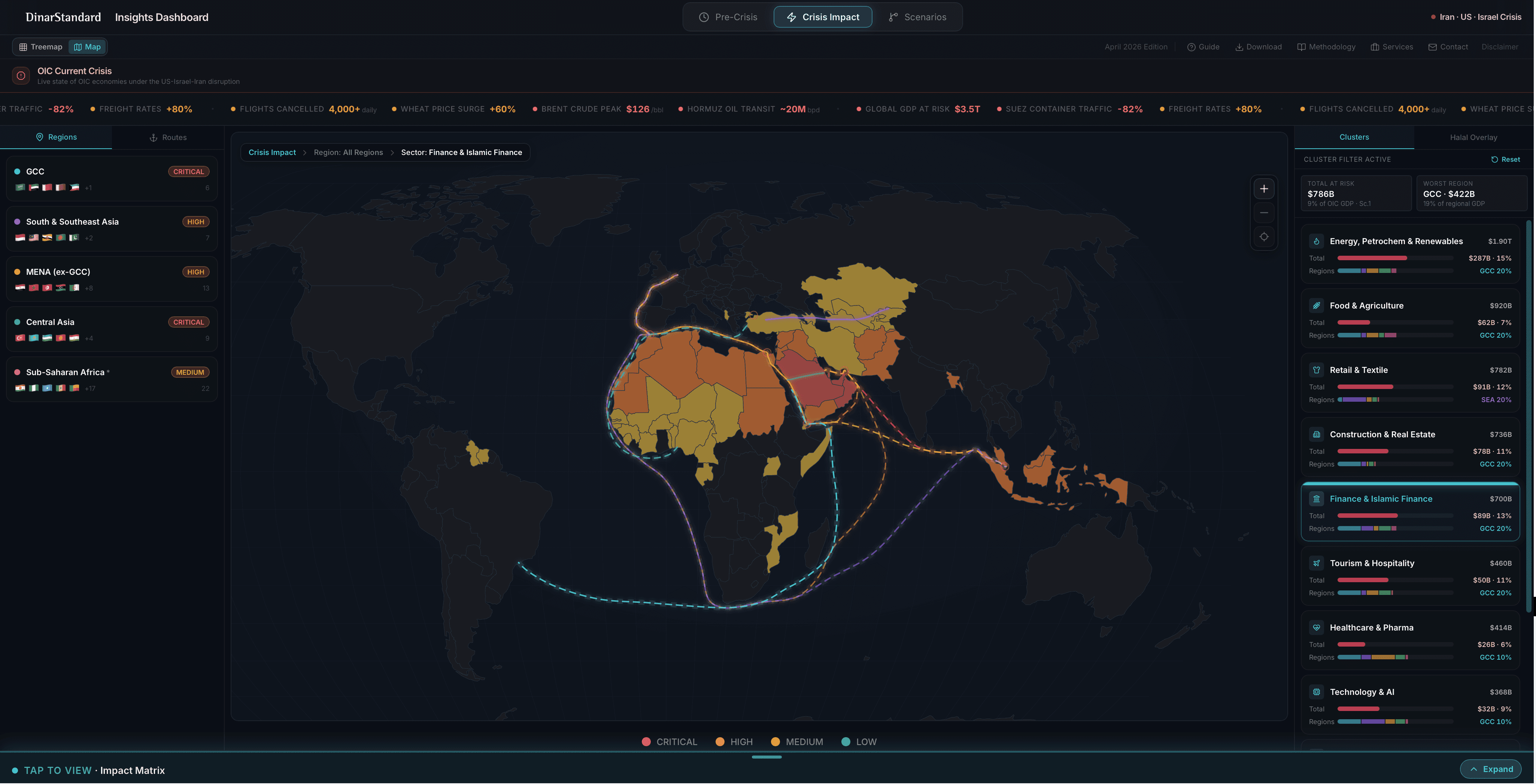
Interactive dashboard insights supporting decision-making
A Sector That Starts From Strength
Unlike sectors that rely predominantly on imported commodities or overseas supply chains, Textile & Fashion Retail represents one of the OIC's greatest industrial strengths.
OIC member states collectively account for a significant share of global textile and apparel production, with major manufacturing hubs including Türkiye, Bangladesh, Pakistan, Indonesia, Morocco and Egypt. At the same time, Muslim consumer expenditure on clothing and footwear reached US$347 billion in 2024 and is projected to exceed US$444 billion by 2029, creating one of the world's fastest-growing consumer markets.
This combination of manufacturing capability and consumer demand means the crisis should be viewed not only as a source of disruption, but also as a catalyst for strengthening regional textile value chains.
Understanding the Transmission Mechanism
One of the key findings of the report is that the crisis affects Textile & Fashion Retail through two interconnected channels.
Supply-side pressures
Higher crude oil prices increase the cost of petrochemical feedstocks used to manufacture synthetic fibres such as polyester and nylon. These cost increases flow through textile production, fabric manufacturing and ultimately into finished apparel and footwear.
As a result, upstream categories such as Man-Made Filaments (HS54) and Man-Made Staple Fibres (HS55) emerge as the most exposed product groups across the OIC.
Demand-side pressures
Higher inflation and weaker consumer purchasing power place pressure on discretionary spending, encouraging consumers to become more price-conscious.
Brands and retailers may increasingly experience:
greater demand for value-oriented fashion
longer purchasing cycles
higher sensitivity to pricing
growing interest in durability and sustainable products
Together, these supply- and demand-side pressures create a complex operating environment requiring coordinated responses from governments and industry.
Regional Exposure Creates Regional Opportunity
The analysis highlights that exposure is not evenly distributed across the OIC.
Different regions occupy distinct positions within the textile value chain:
Central Asia (including Türkiye) serves as the OIC's most integrated textile manufacturing hub.
South Asia remains highly dependent on imported synthetic fibres while leading apparel manufacturing.
North Africa is well positioned to benefit from near-shoring opportunities serving European markets.
The GCC continues to represent one of the largest consumer markets for apparel and footwear.
Southeast Asia combines growing manufacturing capacity with increasing sustainability initiatives.
These differing strengths suggest that future competitiveness will depend less on individual national strategies and more on stronger regional integration.
Strategic Priorities for the OIC
Rather than responding solely through short-term risk mitigation, the report identifies strategic actions capable of strengthening the industry's long-term resilience.
Key priorities include:
expanding regional fibre-to-fashion manufacturing ecosystems
strengthening intra-OIC textile trade corridors
accelerating China+1 sourcing opportunities
investing in circular textiles and next-generation fibres
advancing smart manufacturing and supply-chain visibility
supporting globally competitive modest fashion brands
developing common sustainability frameworks across OIC member states
Collectively, these initiatives can help transform today's disruption into long-term industrial competitiveness.
Looking Beyond the Current Crisis
Periods of geopolitical uncertainty often reshape global manufacturing for years after the immediate conflict has subsided.
For the OIC, the current crisis represents more than a temporary shock to energy markets. It provides an opportunity to deepen regional cooperation, strengthen integrated textile value chains and reinforce the OIC's position as a global leader in Textile & Fashion Retail.
The decisions made today will influence not only how resilient the sector becomes, but also how effectively it captures the next phase of global manufacturing and modest fashion growth.