The 12th edition of the State of the Global Islamic Economy Report (SGIE) 2025/26, produced by DinarStandard, examines the multi-trillion-dollar global Islamic economy across seven key sectors: halal food, pharmaceuticals, cosmetics, modest fashion, travel, media & recreation, and Islamic finance. This year’s report highlights a new growth phase shaped by halal economy sovereignty, Islamic finance expansion, and values-driven consumer behavior.
Overview
The Islamic economy is shifting from demand growth to sovereignty building. Governments and investors are industrializing halal value chains, digitizing trust infrastructure, and scaling Islamic finance rails. Consumer activism is no longer episodic: alternative brands sustain engagement beyond the boycott peak, turning values into market power.
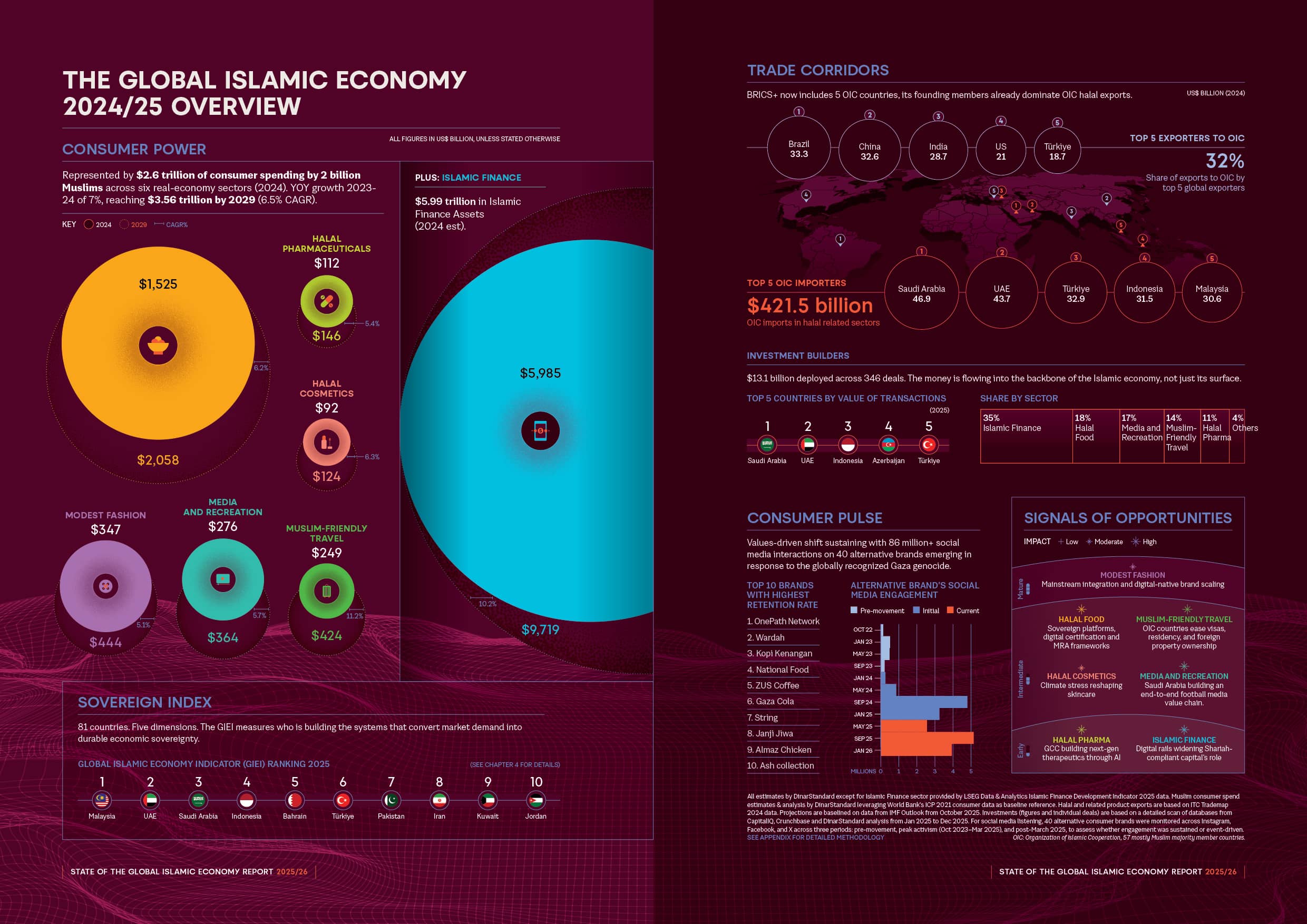
Across the six consumer sectors, the Islamic economy reached US$ 2.60 trillion in 2024 and is projected to grow to US$ 3.56 trillion by 2029, reflecting the scale of halal-related consumer demand across global markets. Islamic finance assets are also expected to continue expanding, reaching US$ 9.72 trillion over the same period.
The Global Islamic Economy Indicator (GIEI) ranked national Islamic economy ecosystems, with Malaysia retaining the top position, followed by the UAE, Saudi Arabia, Indonesia, and Bahrain.
Investment activity accelerated to 346 transactions with approximately US$13.11 billion in disclosed deal value, reflecting strong momentum across Islamic economy sectors and enabling infrastructure.
Against a backdrop of shifting trade dynamics, rising consumer awareness, and geopolitical realignment, SGIE 2025/26 identifies a broader transition from demand growth toward halal economy sovereignty — marked by stronger halal value chains, digital trust infrastructure, Islamic finance rails, and more resilient ecosystem development. OIC economies recorded US$421.5 billion in halal-related imports, reinforcing both the scale of market demand and the opportunity for deeper intra-OIC production and trade integration.
Key Findings
Malaysia retained the top position in the Global Islamic Economy Indicator (GIEI), followed by the UAE, Saudi Arabia, Indonesia, and Bahrain
Islamic economy-relevant investment activity reached approximately US$13.11 billion across 346 transactions in 2024/25
Islamic finance attracted the largest share of investment capital, followed by halal food, media & recreation, and Muslim-friendly travel
OIC economies recorded US$421.5 billion in halal-related imports, underscoring opportunities for stronger domestic production, regional industrial strategies, and deeper intra-OIC trade integration
DinarStandard’s consumer sentiment analysis tracked 26,809 Instagram and Facebook posts, 86+ million social media engagements, and 9,300+ X posts, highlighting sustained consumer preference for ethical, local, and alternative brands
The report identifies a growing shift from demand growth toward sovereignty-building, driven by stronger halal value chains, digital trust systems, localized production, and enabling Islamic finance infrastructure
Sector-Specific Data
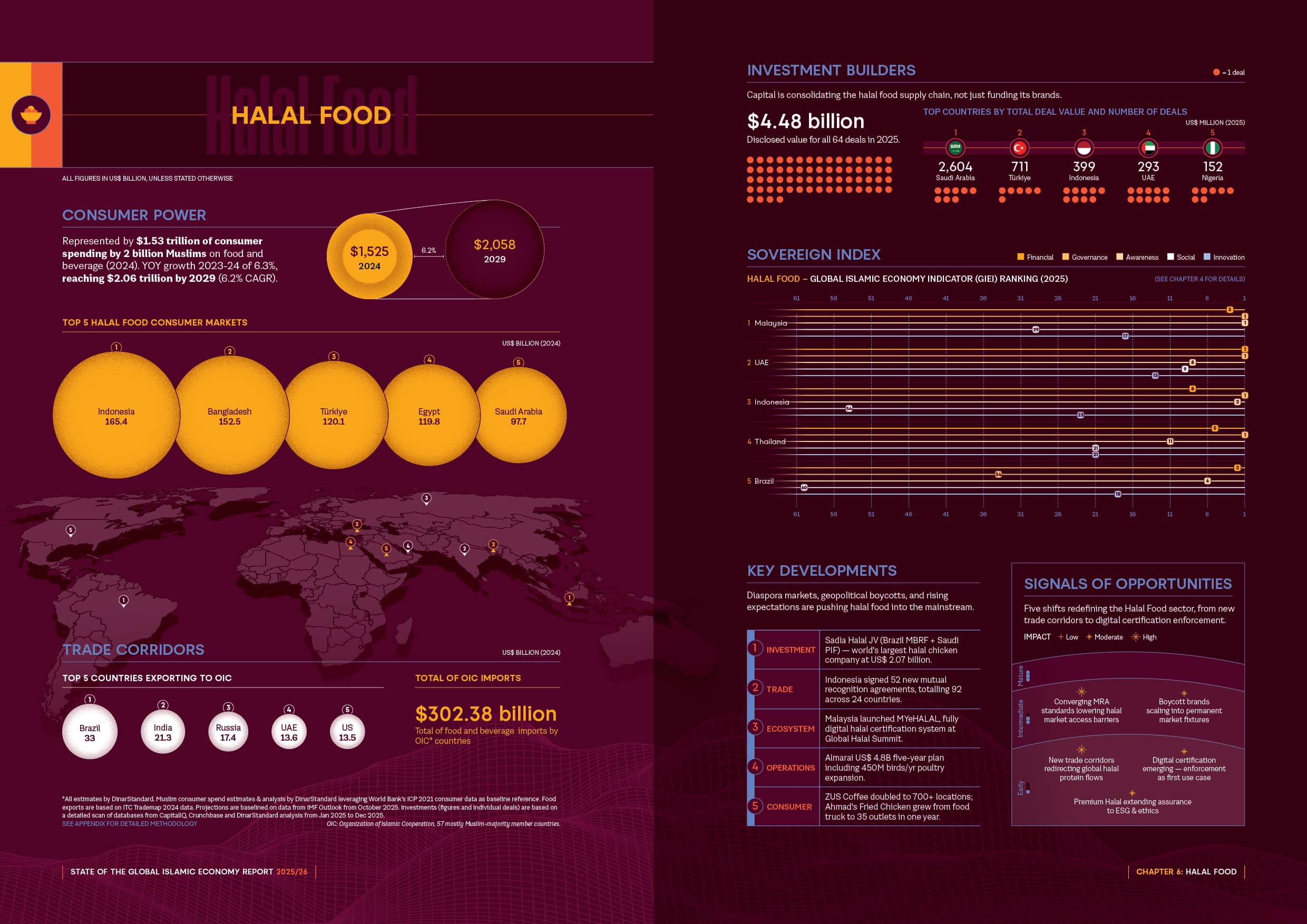
Halal Food: US$1.53 trillion in 2024, projected to reach US$2.06 trillion by 2029
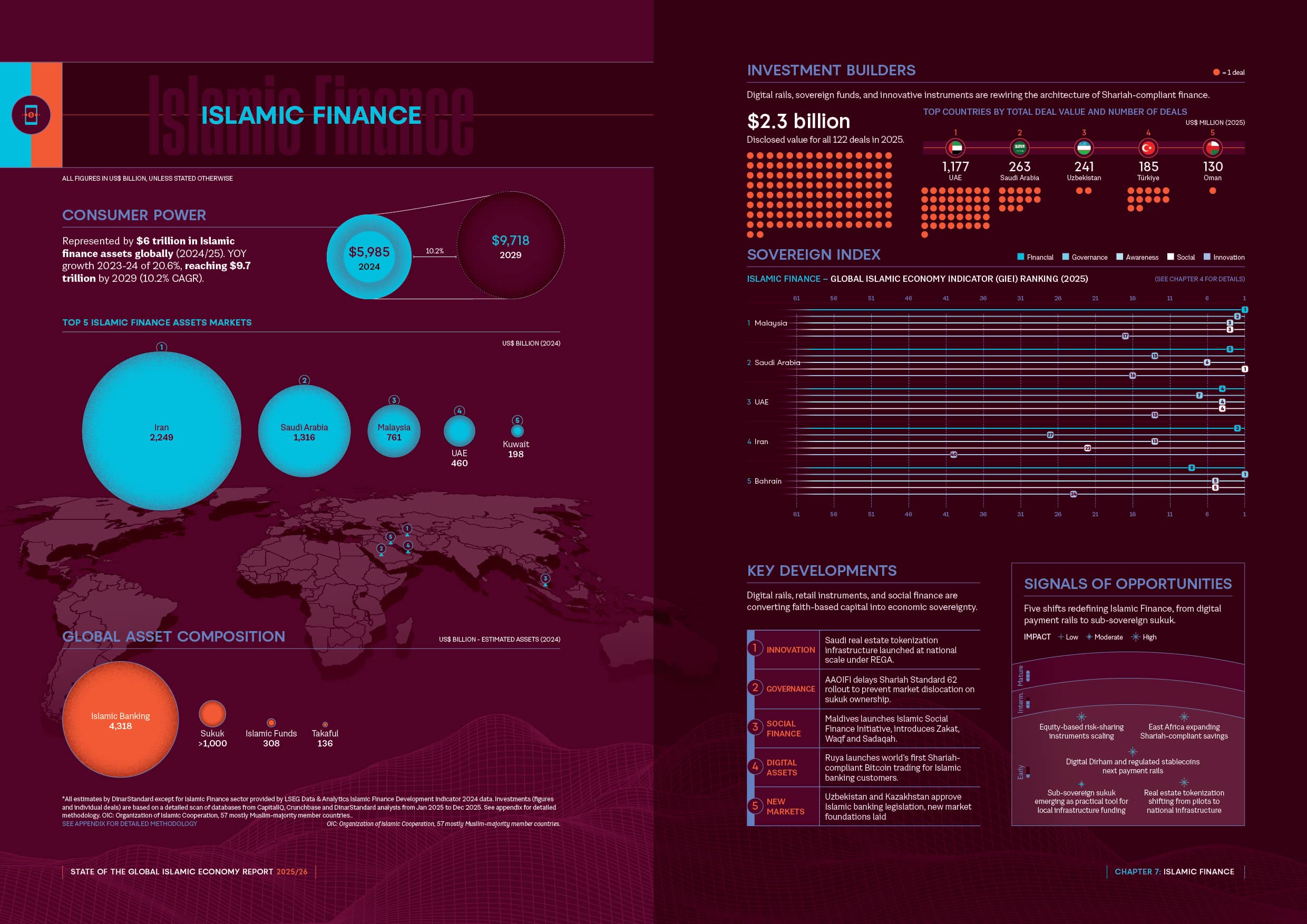
Islamic Finance: US$5.99 trillion in assets in 2024, expected to grow to US$9.72 trillion by 2029
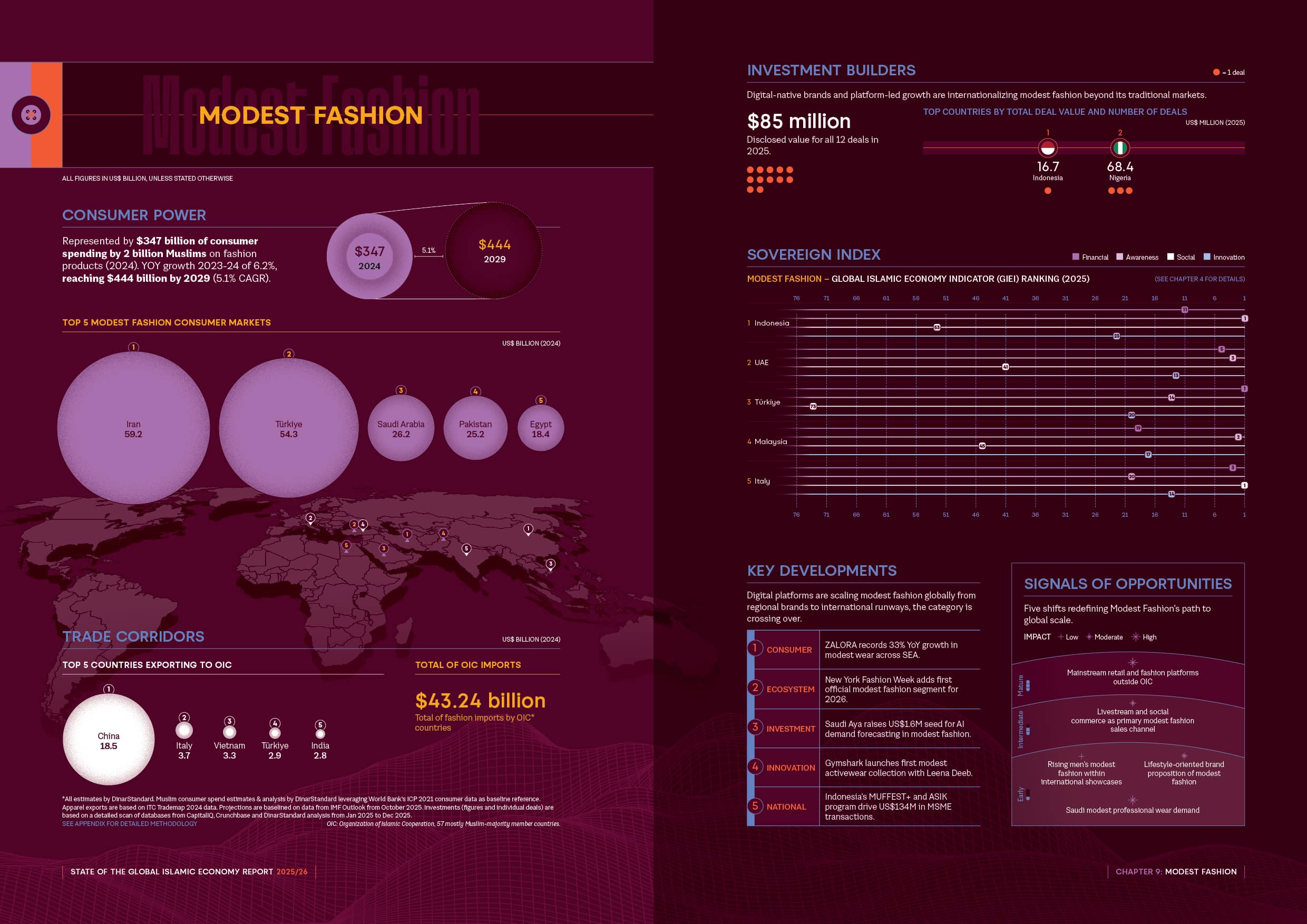
Modest Fashion: US$347 billion in 2024, projected to reach US$444 billion by 2029
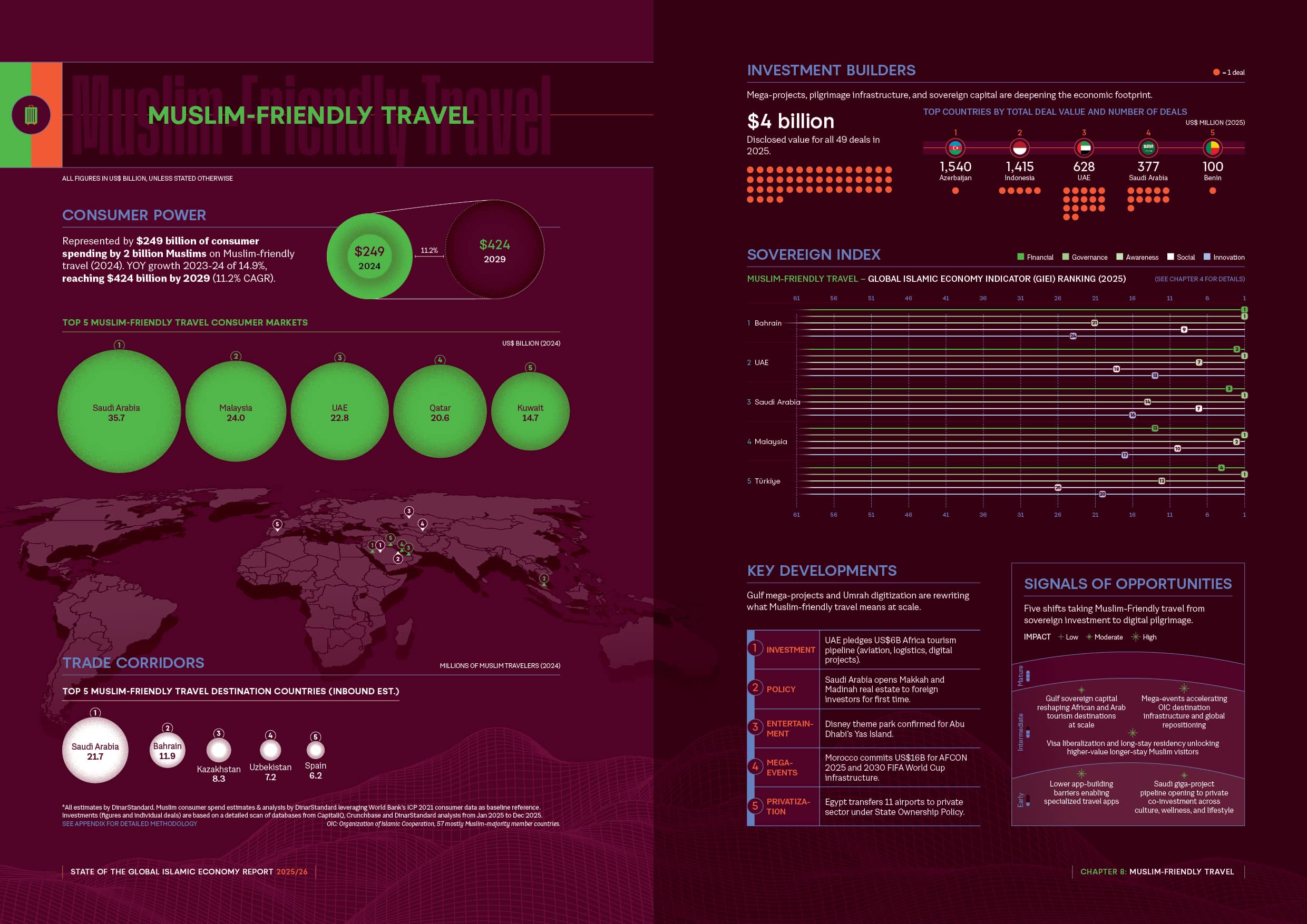
Muslim-Friendly Travel: Fastest-growing consumer sector, rising from US$249 billion in 2024 to US$424 billion by 2029
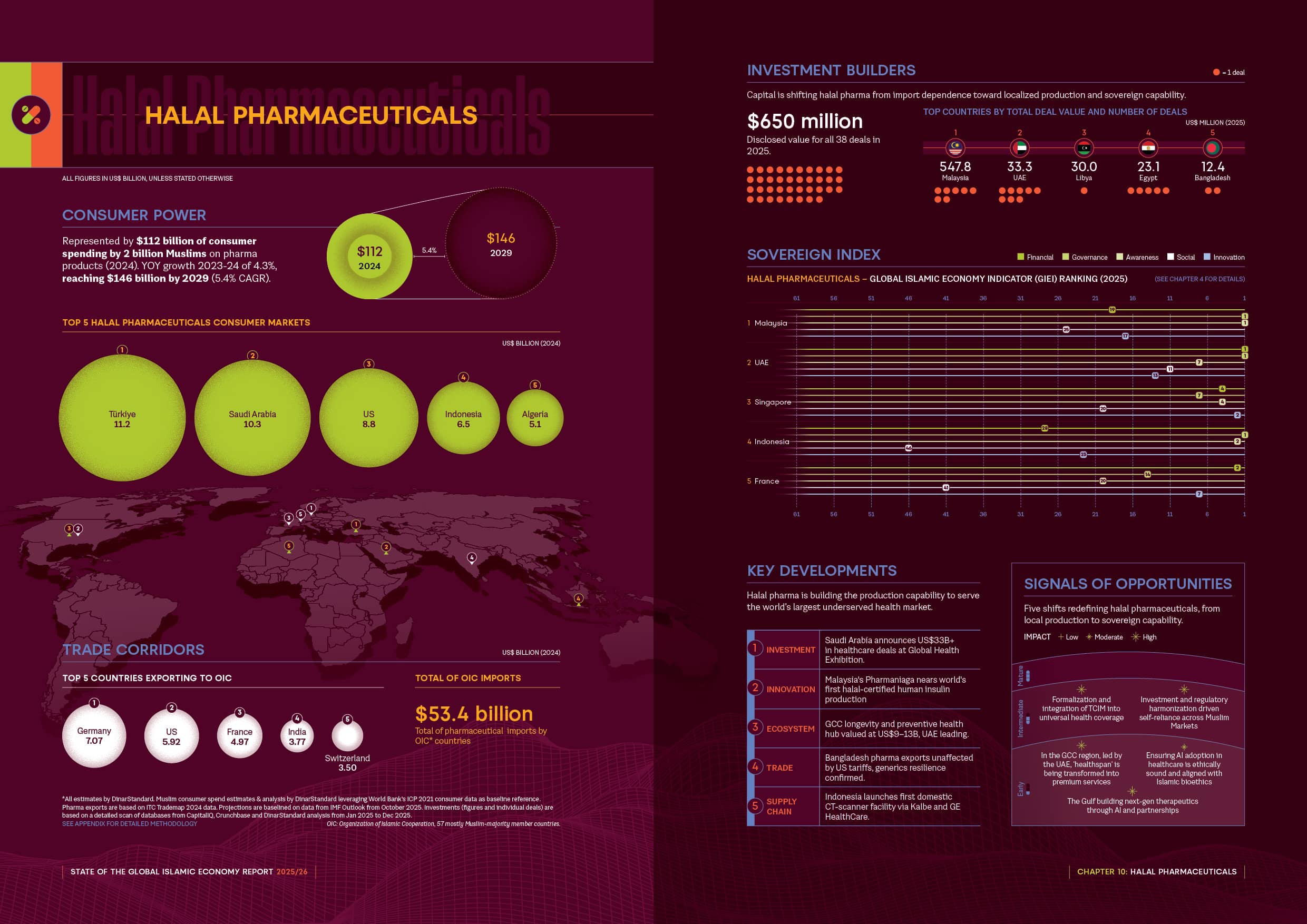
Halal Pharmaceuticals: US$112 billion in 2024, forecast to grow to US$146 billion by 2029
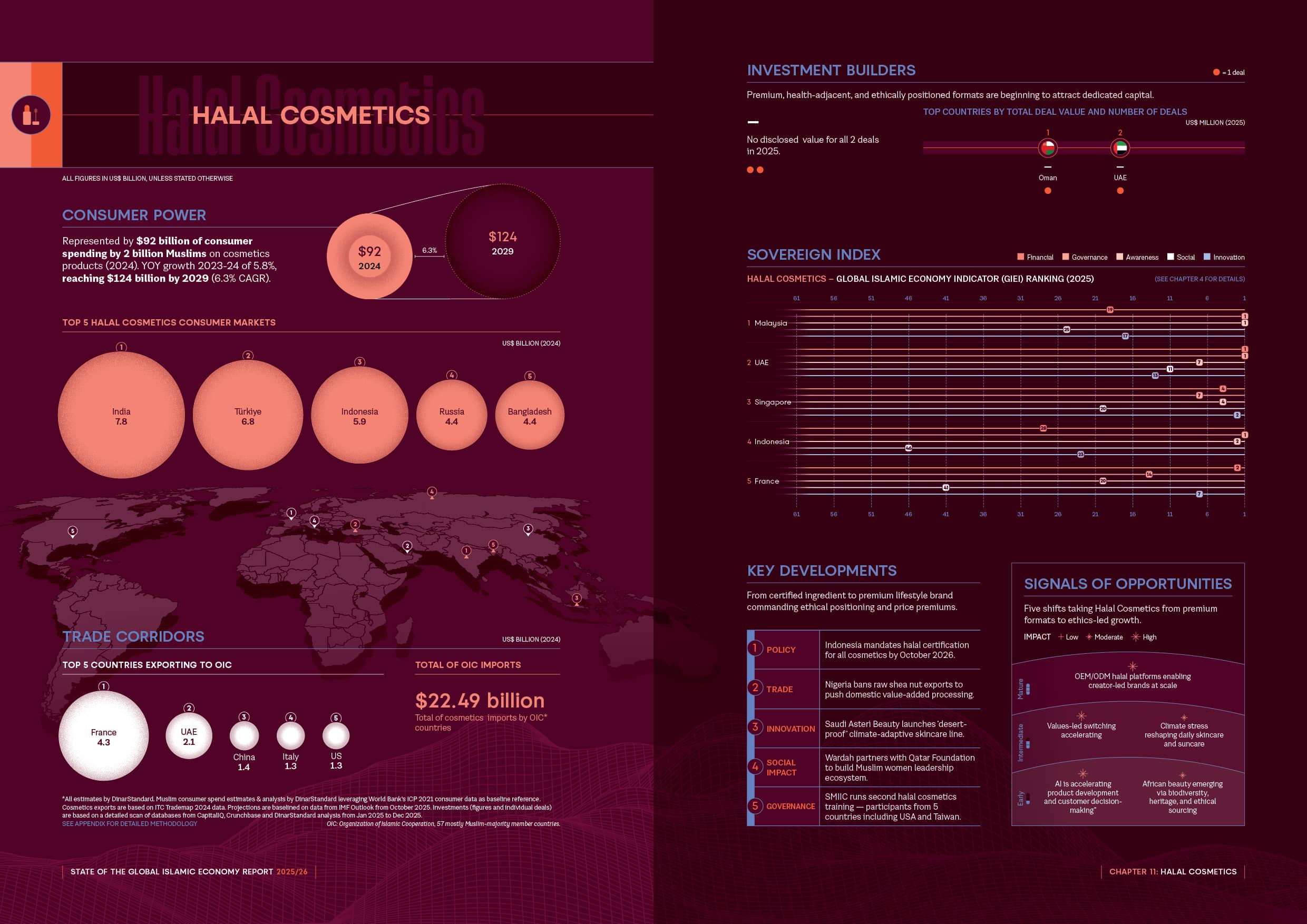
Halal Cosmetics: US$92 billion in 2024, projected to reach US$124 billion by 2029
Media & Recreation: US$276 billion in 2024, expected to grow to US$364 billion by 2029
Emerging Opportunity Signals Across the Islamic Economy
SGIE 2025/26 highlights a new generation of growth and innovation opportunities reshaping the Islamic economy ecosystem, including:
AI-enabled halal certification
Blockchain-enabled traceability
Shariah-compliant digital finance
Pilgrimage digitization and sovereign travel platforms
Localized halal production and halal pharmaceuticals
Clean-label cosmetics
Digital-native modest fashion
Culturally aligned media & recreation
Together, these trends signal an Islamic economy increasingly driven not only by expanding Muslim demand, but by investment in the systems, standards, technologies, and trust infrastructure needed to support long-term growth at scale.
Sector Infographics
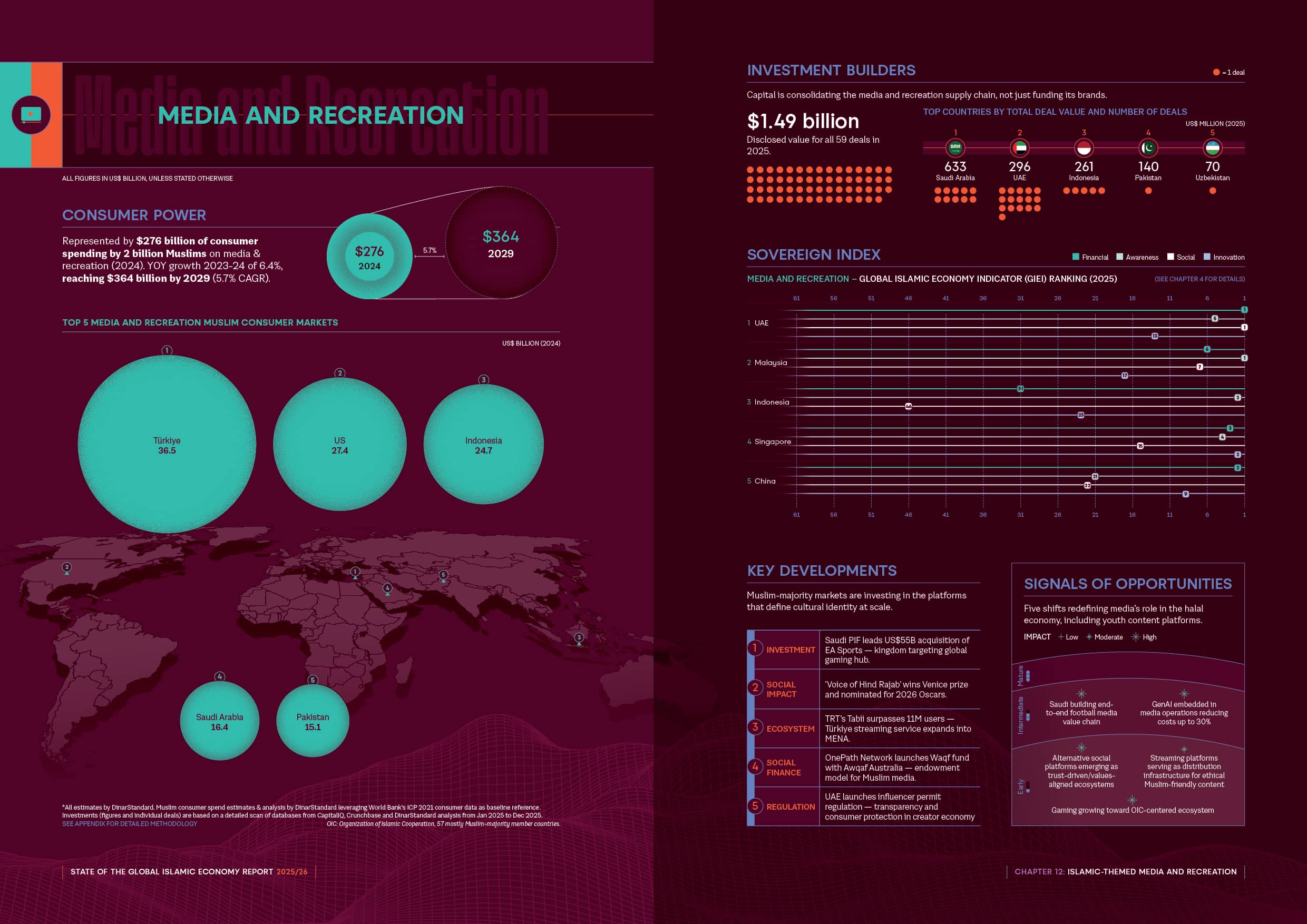
Produced by DinarStandard, in partnership with SalaamGateway.com, with IsDBI as Thought Leadership Partner and IFANCA as Global Strategic Partner, the State of the Global Islamic Economy Report 2025/26 provides insights into market performance, national competitiveness, consumer trends, investment activity, and emerging opportunity areas shaping the future of the global Islamic economy.